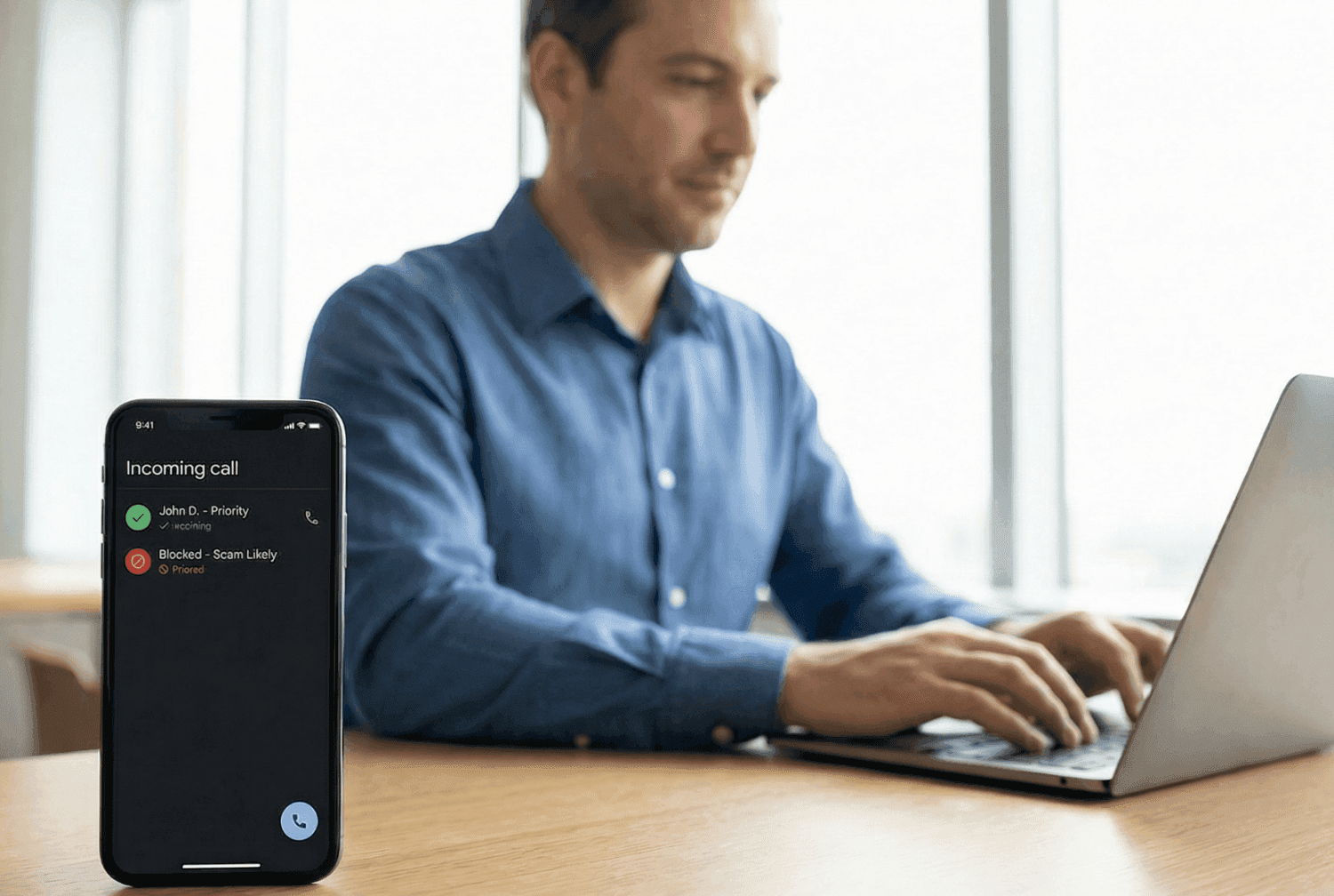
Imagine this: 52.8 billion robocalls flooded US phones in 2024 alone. That's roughly 162 calls for every person in America. If you're running a business, managing IT systems, or simply trying to maintain productivity, these interruptions aren't just annoying – they're costing you money.
Enter call screening, the digital gatekeeper standing between you and unwanted interruptions.
What is call screening?
Call screening is the process of identifying who’s calling before you decide how to handle the call. Businesses use it to filter out unwanted calls, prioritize important ones, and make sure customers reach the right person. Screening can be as simple as checking caller ID, or as advanced as using automated systems and AI-powered tools to detect spam, route enquiries, and free up staff time.
How call screening works
Call screening works by evaluating information about an incoming call and applying rules to decide what happens next. At the most basic level, this might mean checking caller ID before answering.
Automated systems can take it further by prompting callers to state their name or reason for calling, then routing them accordingly. AI-powered call screening adds another layer by detecting spam, analyzing context, and ensuring valuable calls get through while time-wasting interruptions are filtered out.
Types of call screening
Call screening can take several forms, ranging from simple manual checks to advanced AI-powered solutions. Each type offers different levels of control, automation, and efficiency depending on your business needs.
Type of call screening | How it works | Key advantages | Limitations |
|---|---|---|---|
Manual | Staff check caller ID or ask for details before answering | Flexible, no special tools needed | Time-consuming, inconsistent, risk of missed calls |
Automated | Callers interact with menus or prompts before connecting | Reduces spam, routes calls efficiently | Less personal, can frustrate callers if menus are too long |
AI-powered | Uses algorithms to detect spam, analyze context, and handle routine calls | Highly accurate, saves time, improves customer experience | Requires investment in technology or services |
Manual call screening
This is the most basic approach, where someone checks caller ID or asks for a name before deciding whether to answer. It’s simple but time-consuming and can be inconsistent if staff are busy or distracted.
Automated call screening
Automated systems introduce tools like recorded prompts or menu options. For example, callers may be asked to say their name or press a key to be connected. This filters out spam and ensures callers are directed to the right department, reducing the load on staff.
AI-powered call screening
AI brings intelligence and context to the process. It can detect spam with high accuracy, prioritize calls based on importance, and even handle routine enquiries automatically. This not only saves time but also ensures important calls are never missed, while creating a smoother experience for customers.
6 common benefits of call screening
Call screening offers more than just a way to block unwanted calls. When implemented well, it becomes a tool for improving efficiency, protecting staff time, and delivering a better customer experience.
Reduces spam and robocalls
Unwanted calls can waste hours of staff time every week. Screening filters them out before they reach your team, letting employees focus on real customer interactions.
Prioritizes important callers
Not all calls have the same urgency. Screening helps ensure high-value clients, urgent enquiries, or time-sensitive calls are identified and answered quickly, while less critical calls are handled appropriately.
Saves time for your team
By preventing unnecessary interruptions, call screening keeps staff focused on the tasks that matter most. Automated or AI-driven screening can even answer routine questions, reducing the need for human involvement.
Improves customer experience
When calls are routed correctly from the start, customers avoid the frustration of being transferred multiple times. AI-powered tools can also provide instant responses, ensuring enquiries are handled promptly and professionally.
Supports flexible working
For businesses with remote teams or staff who travel frequently, call screening helps maintain accessibility. Calls can be filtered and routed to the right person wherever they’re working, without sacrificing professionalism.
Strengthens security and privacy
Screening calls before connecting can help protect against scams or phishing attempts. By filtering out suspicious numbers, businesses reduce the risk of fraud and safeguard sensitive information.
How to implement call screening in your business in 5 steps
Putting call screening into place doesn’t have to be complicated. With the right setup, businesses can filter calls effectively, keep interruptions to a minimum, and make sure important enquiries are always prioritized.
1. Choose the right type of screening
Decide whether manual, automated, or AI-powered call screening fits your needs. Smaller businesses may start with basic manual checks, while growing teams often benefit from automated menus or AI tools that handle higher call volumes with more accuracy.
2. Set clear screening rules
Establish guidelines for how calls should be handled. For example, important clients might always be routed directly to a manager, while routine enquiries go through an automated menu. Clear rules keep the process consistent and prevent customers from slipping through the cracks.
3. Train your team
If staff are involved in the screening process, make sure they understand the protocols. They should know how to identify spam calls, when to escalate enquiries, and how to manage calls professionally so every interaction reflects well on the business.
4. Leverage AI-powered answering services
Pairing call screening with an AI answering service like Rosie AI offers 24/7 coverage and smarter filtering. Calls can be automatically screened for spam, routine questions can be handled instantly, and important enquiries can be forwarded to the right person. This reduces missed calls, saves time, and provides a seamless customer experience.
5. Review and refine regularly
Call screening isn’t static. Monitor your call data to see how well your system is working, then adjust as needed. Seasonal demand, staffing changes, or new customer priorities may require updates to your screening rules or tools.
The bottom line
Call screening gives businesses more control over their phone lines, cutting out spam, prioritizing important calls, and saving valuable time. Whether you’re a small team trying to reduce interruptions or a larger organization looking for smarter call management, the right screening system improves communication and creates a more professional customer experience.
Rosie AI takes this a step further by combining smart spam detection with 24/7 virtual receptionist support. Every call is filtered, prioritized, and handled smoothly, so no enquiry goes unanswered. Start your free trial today to unlock all features and see how Rosie AI can transform your business communications.
FAQs
Is call screening the same as caller ID?
Not quite. Caller ID simply displays the incoming number, while call screening evaluates the call and applies rules, such as filtering spam, prompting the caller for details, or routing it to the right person.
Will call screening annoy my customers?
When implemented thoughtfully, call screening actually improves the customer experience. Automated menus should be short and clear, while AI tools can route calls quickly without unnecessary steps.
Can small businesses benefit from call screening?
Definitely. Even solo professionals can use call screening to cut down on spam and stay focused on client work. AI-powered answering services like Rosie AI make advanced screening affordable and easy to set up.
How do I know which type of call screening is right for me?
It depends on call volume and business needs. Manual screening may be enough for very small teams, while busy companies often benefit from automated or AI-driven solutions that handle calls more efficiently.
Does call screening work with existing phone systems?
Yes. Most modern phone systems support some form of call screening, and AI answering services can integrate smoothly with your existing setup to extend functionality without major changes.